Skipness Castle, Kintyre
Skipness Castle and its nearby chapel, both located on the Kintyre Peninsula, are historic gems of the west coast of Scotland. Overlooking the Kilbrannan Sound and offering stunning views across to the Isle of Arran, the castle and chapel tell a story of power, faith, and defense stretching back nearly 800 years.
Skipness Castle was originally built in the 13th century by the MacSween Clan, a powerful family with ties to both the Norse rulers of the Hebrides and the Scottish Crown. As one of the most well-preserved medieval castles in Scotland, Skipness stands as a remarkable example of a coastal fortress designed to protect against both land and seaborne threats. Alongside the castle, the Skipness Chapel, a relic of Scotland’s early Christian heritage, adds to the historical importance of this site.
Skipness Castle: A Coastal Fortress
Skipness Castle was likely begun in the early 1200s, around the same time that the MacSweens were building Castle Sween in nearby Argyll. Its location on the east coast of Kintyre made it ideal for overseeing maritime traffic through the Firth of Clyde and providing a defense against Norse incursions. The original castle was constructed with a large courtyard, surrounded by high stone walls, and featured a keep and various domestic buildings.
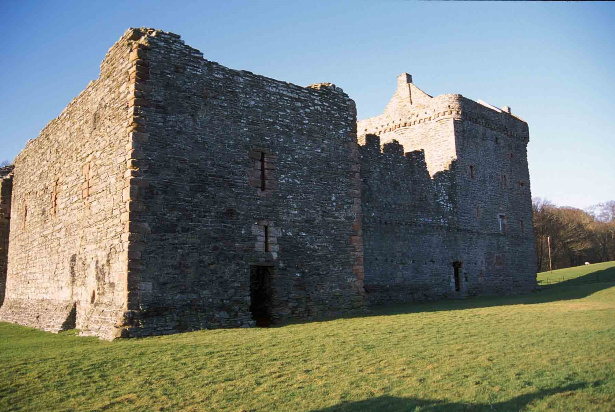
During the 13th century, the castle passed into the hands of the Stewarts and then the MacDonalds, who would become the Lords of the Isles. Under the MacDonalds, Skipness Castle was expanded, including the addition of a tower house in the 16th century, which provided living quarters and added defensive capabilities. The thick walls and high position made Skipness Castle an imposing site for anyone attempting to raid the Kintyre coast.
The castle’s position on the shoreline gave it a commanding view of the surrounding area, allowing its occupants to monitor shipping lanes and defend against potential attackers. While it was primarily built as a fortress, Skipness Castle also functioned as a residence for the local lord, and its interior would have been furnished to provide comfort as well as security.
Strategic Importance and Later History
Skipness Castle’s significance is tied to the turbulent history of the Scottish west coast, especially during the Wars of Scottish Independence in the 14th century. The castle changed hands multiple times, including during the conflicts between the MacDougalls and Robert the Bruce, and later between the Campbells and MacDonalds.
By the 17th century Skipness Castle had become part of the vast holdings of Clan Campbell, following their rise to power as one of the dominant forces in Scottish politics. However, as the centuries passed, the castle’s military significance waned, and it gradually fell into disrepair. By the 18th century it was abandoned as a residence, leaving it to the forces of nature.
Today, Skipness Castle is remarkably well-preserved, with its high walls, battlements, and tower house still standing. Visitors can walk through the castle’s ruins, climb the tower for panoramic views of the Isle of Arran and explore the castle’s various chambers and courtyards.
Skipness Chapel: A Sacred Space
Adjacent to the castle lies the Skipness Chapel, a beautiful example of early Christian architecture in Scotland. The chapel was built in the 13th century around the same time as the castle, and likely served both the castle’s occupants and the surrounding community. Constructed in simple Gothic style the chapel’s walls are still largely intact, with its east window providing a peaceful view of the nearby sea.
The chapel was dedicated to St. Brendan, a popular saint in early medieval Scotland. Inside, visitors can see remnants of medieval carvings stonework, and the remains of a sarcophagus believed to have belonged to one of the early lords of Skipness. The chapel would have been an important center for religious life in the area, and its location next to the castle underscores the close connection between the military and spiritual worlds in medieval Scotland.
Despite its age, the chapel remains an incredibly serene and atmospheric place, with its quiet surroundings and coastal setting making it a beautiful spot for reflection. Today, the chapel and its surrounding graveyard are a poignant reminder of the area’s deep Christian heritage, and they offer a contrast to the rugged, defensive nature of Skipness Castle.
Visiting Skipness Castle and Chapel Today
Skipness Castle and Chapel are open to the public, and both sites can be explored freely. The combination of the castle’s dramatic ruins and the peaceful atmosphere of the chapel makes this a must-visit destination for anyone interested in Scottish history and architecture. The scenic drive to the castle, which winds along the Kintyre coast, offers visitors a glimpse of the breathtaking natural beauty of this part of Scotland, with views over the Kilbrannan Sound and beyond.
Visitors can climb the castle’s tower for an unforgettable view of the surrounding area, including the distant peaks of Arran. The castle’s walls, still formidable despite their age, evoke the power and influence the Lords of Skipness once held over the region.
Skipness Castle and Chapel are key pieces of Scotland’s medieval heritage, offering a rare combination of military history and spiritual significance. The castle’s strong fortifications and the serene beauty of the chapel provide visitors with an immersive experience of Scotland’s past. Whether you’re exploring the high battlements of the castle or reflecting quietly in the ancient chapel, Skipness offers a journey back in time to an era of clan rivalry, maritime defense, and faith on the wild west coast of Scotland