Carnasserie Castle, Kilmartin
Perched on a rocky bank just a mile north of Kilmartin, Carnasserie Castle is a striking example of 16th-century architecture. Built around 1565 by John Carswell, the first Protestant Bishop of Argyll, the castle showcases a fine tower house with an adjoining hall. The tower stands an impressive five stories tall, making it a "skyscraper" of its time.
Carnasserie was captured and partially destroyed in 1685 by Maclaine of Torloisk, during a conflict involving its then-Campbell owner’s participation in the Monmouth Rising. The castle remains largely intact and is now under the care of Historic Scotland, offering free access year-round. Visitors can explore the ruins and enjoy breathtaking views from its elevated location.
Carnasserie Castle’s towering presence reflects the transition from medieval strongholds to Renaissance-style residences, blending practicality with sophistication. The tower house, standing at five stories, is remarkable for its height and design, featuring decorative carvings and impressive stonework. The hall adjoining the tower would have served as the main living and social space, emphasizing the castle’s role not just as a defensive structure but as a place of governance and administration.
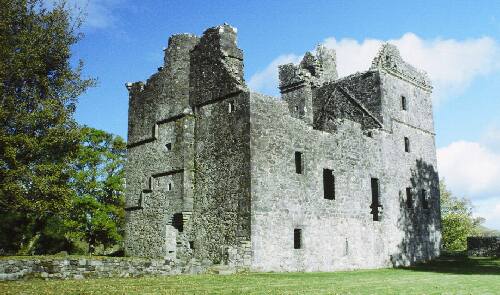
Historically, Carnasserie played a pivotal role in the religious and political changes sweeping through Scotland in the 16th and 17th centuries. As the seat of John Carswell, the first Protestant Bishop of Argyll, it was a symbol of the Reformation's spread into the Highlands. Carswell’s tenure here marks a significant shift in Scottish religious history, as he translated the Book of Common Order into Gaelic, promoting Protestant worship in the local language.
Captured and Destroyed
The castle’s turbulent history continued after Carswell’s death, culminating in its capture during the Monmouth Rising in 1685. Maclaine of Torloisk, a supporter of the deposed James VII, attacked the castle when its Campbell owner sided with the Duke of Monmouth, who sought to overthrow the king. During this attack, parts of the castle were blown up, and while the castle was never fully repaired, its remaining structure has stood the test of time, offering visitors a glimpse into its storied past.
Visiting Carnasserie Castle
Carnasserie Castle is a must-visit for history enthusiasts and hikers alike. The castle is open year-round and free to explore, with easy access via an off-road car park just below the ridge where the castle stands. The walk to the castle is moderately steep, so visitors are encouraged to wear good walking shoes. Once at the castle, you’ll be rewarded with stunning views over the surrounding countryside, particularly toward the Kilmartin Glen, an area rich in prehistoric and medieval archaeology.
For those looking for a longer, more scenic route, there’s a pleasant walking path that leads from Kilmartin village to the castle, away from the main road, allowing visitors to enjoy the peaceful landscapes and the historic ambiance of the area.
Why Visit Carnasserie Castle?
Carnasserie Castle offers a perfect combination of architectural beauty, historical intrigue, and stunning natural surroundings, Its towering five-story keep and impressive stonework provide insight into the lives of Scotland’s elite during a time of significant religious and political change. The castle’s tumultuous history, including its role in the Monmouth Rising, adds layers of depth for those interested in Scotland’s past.
Whether you're captivated by its historical significance, charmed by its architecture, or simply drawn by the beauty of Kilmartin Glen, Carnasserie Castle provides an unforgettable experience for visitors of all ages.